Standing in front of a bank teller’s counter to withdraw cash is a scene most young Indians have never actually experienced — the ATM replaced it decades ago, so thoroughly that an entire generation now treats instant cash access as simply how banking works. Yet ATMs come with genuine trade-offs that rarely get discussed once the novelty wears off, from fraud exposure to the ₹23-per-transaction fee that now kicks in once you exceed your monthly free limit under the latest RBI rules. Here’s a clear, honest look at what ATMs actually give you, and where they fall short.
| Aspect | Detail |
| Free transactions (own bank) | 5 per month, all locations |
| Free transactions (other bank, metro) | 3 per month |
| Free transactions (other bank, non-metro) | 5 per month |
| Charge after free limit | ₹23 + GST per financial transaction |
| Non-financial transaction charge | ₹8.50-11 + GST after free limit |
| Typical daily withdrawal limit | ₹20,000-1,00,000, depending on card and bank |
Advantage: 24/7 Cash Access Without Branch Dependency
The single biggest reason ATMs transformed banking is their round-the-clock availability, freeing customers entirely from bank branch operating hours.
- Available anytime, including nights, weekends, and public holidays when branches remain closed
- Removes the need to plan cash withdrawals around a bank’s limited working hours
- Particularly valuable during emergencies when immediate cash access genuinely matters
- Widely distributed across cities, towns, and increasingly rural India, reducing travel time to access funds
Advantage: Reduced Dependence on Human Staff
ATMs handle routine transactions without requiring a bank employee, which benefits both customers and the broader banking system.
- Eliminates queues at teller counters for simple cash withdrawal or balance enquiry needs
- Frees up bank staff to focus on more complex customer service and advisory tasks
- Reduces the operational cost banks incur processing high volumes of routine, low-complexity transactions
- Allows banks to extend service reach into areas where staffing a full branch wouldn’t be economically viable
Advantage: Multiple Transaction Types Beyond Cash Withdrawal
Modern ATMs do considerably more than dispense cash, expanding their genuine utility well beyond the original purpose.
- Balance enquiries and mini-statements give a quick account snapshot without logging into net banking
- Cash and cheque deposit functionality at many machines, particularly own-bank ATMs
- PIN changes, mobile number updates, and other basic account maintenance tasks
- Fund transfers between accounts at the same bank, in many cases
Advantage: Free Transaction Allowance Under RBI Rules
Despite rising fees beyond the free limit, RBI mandates a reasonable monthly allowance that covers most regular users’ actual needs.
- Five free transactions monthly at your own bank’s ATMs, covering both financial and non-financial activity
- Three free transactions monthly at other banks’ ATMs in metro cities
- Five free transactions monthly at other banks’ ATMs in non-metro locations
- Basic Savings Bank Deposit account holders specifically receive a guaranteed minimum of four free cash withdrawals monthly, even at other banks’ ATMs
Disadvantage: Charges Beyond the Free Limit Add Up
Once you exceed your monthly free transaction allowance, costs accumulate quickly for anyone withdrawing cash frequently across multiple banks.
- ₹23 plus GST applies per financial transaction beyond the free limit, up from ₹21 previously
- Non-financial transactions like balance enquiries also count toward your free limit and incur charges once exhausted
- A common misconception is that balance checks are always free regardless of frequency — they aren’t
- Frequent users relying heavily on other banks’ ATMs in metro cities, where the free limit is lowest at three, are most exposed to these charges
Disadvantage: Fraud and Security Risks
ATMs remain a genuine target for card skimming, PIN theft, and other forms of fraud, despite years of security improvements.
- Card skimming devices installed on ATM card slots can capture card data without the user’s knowledge
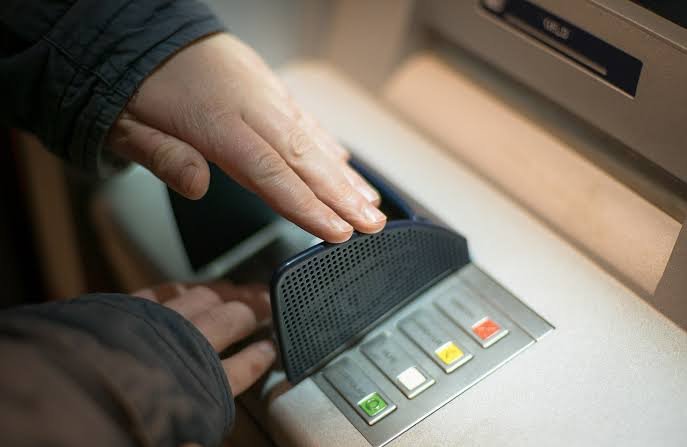
- Shoulder surfing, where someone observes your PIN entry, remains a low-tech but effective fraud method
- Cash trapping devices can physically withhold dispensed cash, tricking users into re-entering their PIN
- Users at poorly monitored or isolated ATMs face higher risk than those at well-lit, camera-monitored locations inside secure premises
Disadvantage: Technical Failures and Cash Unavailability
ATMs are machines, and machines occasionally malfunction in ways that genuinely inconvenience users at the worst possible moments.
- Cash-out situations, where an ATM runs empty, are common at high-traffic locations, especially around salary disbursement periods
- Failed transactions where an account gets debited but no cash dispenses require a formal reversal process that can take days to resolve
- Network connectivity issues can render an ATM temporarily non-functional without clear indication to the user beforehand
- Card retention by a malfunctioning machine requires a branch visit or customer care call to resolve, adding genuine hassle
Disadvantage: Withdrawal Limits Can Constrain Larger Cash Needs
Daily withdrawal caps, while designed for security, can genuinely inconvenience users needing larger sums of cash at once.
- Typical daily withdrawal limits range from ₹20,000 to ₹1,00,000 depending on the specific bank and card tier
- Users needing to withdraw amounts beyond this limit must either visit a branch directly or spread withdrawals across multiple days
- This can be particularly frustrating during emergencies or time-sensitive large cash requirements
- Premium card variants typically offer higher limits, meaning basic account holders face tighter constraints than premium customers
Frequently Asked Questions
Q1. How many free ATM transactions do I get each month in 2026?
You get five free transactions monthly at your own bank’s ATMs everywhere, plus three free transactions at other banks’ ATMs in metro cities or five in non-metro cities.
Q2. What should I do if an ATM debits my account but doesn’t dispense cash?
Report it immediately to your bank through customer care or a complaint form; failed transactions where money is debited without cash dispensed are typically reversed automatically within a few business days under RBI guidelines.
Q3. Do balance enquiries count toward my free ATM transaction limit?
Yes, both financial transactions like withdrawals and non-financial transactions like balance enquiries or mini-statements count toward your monthly free limit.
Q4. How can I protect myself from ATM card skimming fraud?
Cover the keypad while entering your PIN, inspect the card slot for unusual attachments before inserting your card, and prefer ATMs located inside bank branches or well-monitored locations over standalone, isolated machines.