Long before neobanks and digital-first lenders became fashionable, cooperative banks were already running India’s original community banking model — member-owned, “one-person-one-vote” institutions built on mutual trust rather than shareholder profit. India’s cooperative banking sector remains genuinely vast, serving over 1,457 urban centres and more than 96,000 rural locations, and two of its oldest members, Saraswat Bank and Cosmos Bank, are now seeking RBI approval to convert into full-fledged commercial banks after more than a century of cooperative-model operation. This list covers the top 10 cooperative banks in India in 2026, ranked by scale and business volume.
| Rank | Bank | Founded | Total Business (approx.) |
| 1 | Saraswat Co-operative Bank | 1918 | ₹91,800 crore+ |
| 2 | SVC Co-operative Bank | 1906 | ₹39,353-78,706 crore |
| 3 | Cosmos Co-operative Bank | 1906 | ₹35,408-38,634 crore |
| 4 | TJSB Sahakari Bank | — | ₹23,000 crore |
| 5 | Abhyudaya Co-operative Bank | 1965 | ₹13,800 crore+ |
| 6 | Bharat Co-operative Bank | 1978 | Established mid-tier |
| 7 | NKGSB Co-operative Bank | — | Established mid-tier |
| 8 | Janata Sahakari Bank | — | Established mid-tier |
| 9 | Kalupur Commercial Co-operative Bank | — | Regional Gujarat leader |
| 10 | Punjab and Maharashtra Co-operative Bank | — | Recovering from 2019 crisis |
1. Saraswat Co-operative Bank Ltd.
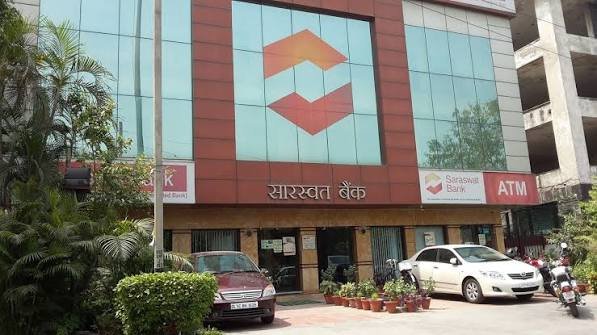
Saraswat Bank stands as India’s undisputed largest Urban Co-operative Bank, founded in 1918 in Mumbai and now operating across eight states with a century-old legacy.
- Total business surpassed ₹91,800-1,00,000 crore in early 2026, a milestone for the entire UCB segment
- Operates over 300 branches and 350-plus ATMs, with a technology stack rivalling private-sector banks
- Received RBI approval in 2025 to merge with New India Co-operative Bank, significantly expanding its footprint
- Among the first UCBs to seek RBI approval for conversion into a full-fledged universal commercial bank
2. SVC Co-operative Bank Ltd. (Shamrao Vithal)
SVC Bank, founded in 1906, has built a strong Mumbai-centred presence and consistently ranks among the largest and most efficiently run UCBs in India.
- Total business ranging roughly ₹39,353-78,706 crore depending on reporting period
- Maintains one of the lowest Net NPA ratios in the entire cooperative banking sector
- Partnered with leading fintechs to launch Co-op-as-a-Service specifically for rural credit delivery
- Operates through nearly 200 branches, backed by strong operational efficiency metrics
3. Cosmos Co-operative Bank Ltd.
Cosmos Bank, established in 1906 in Pune, holds a genuinely distinctive first — becoming the first cooperative bank in India to open a currency chest.
- Serves more than 20 lakh customers across branches spread over seven states
- Total business ranging roughly ₹35,408-38,634 crore
- Built a strong reputation for professionalism and ethical banking practices over more than a century
- Now seeking RBI approval alongside Saraswat Bank to convert into a full commercial banking entity
4. TJSB Sahakari Bank
TJSB Sahakari Bank, headquartered in Thane, has built its reputation around customer-centric digital services within Maharashtra’s dense cooperative banking landscape.
- Total business around ₹23,000 crore
- Known specifically for innovative, customer-focused digital banking initiatives
- Represents the mid-tier of established, financially stable Maharashtra-based cooperative banks
- Continues expanding its digital service offerings to compete with both larger UCBs and private banks
5. Abhyudaya Co-operative Bank
Abhyudaya Bank has maintained a multi-state presence since 1965, headquartered in Mumbai and known for customer-friendly loan policies.
- Total business exceeding ₹13,800 crore
- Operates across multiple states beyond its Mumbai home base
- Recognised specifically for accessible, customer-friendly retail loan policies
- Part of Maharashtra’s dense concentration of established cooperative banking institutions
6. Bharat Co-operative Bank
Bharat Co-operative Bank, founded in 1978 and headquartered in Mumbai, has built its identity around focused retail banking services.
- Concentrates on savings accounts, loans, and mobile banking for retail customers
- Has made significant strides in technological advancement to enhance customer experience
- Maintains strong commitment to community service alongside its core banking operations
- Represents the newer generation of Mumbai-based cooperative banks, younger than Saraswat or Cosmos
7. NKGSB Co-operative Bank
NKGSB Co-operative Bank has established itself as a recognised, trusted name within India’s cooperative banking sector, regularly appearing among industry-tracked top performers.
- Serves retail and business banking customers with a full suite of deposit and loan products
- Maintains established presence within Maharashtra’s competitive cooperative banking market
- Regularly cited alongside Saraswat, Cosmos, and SVC among India’s top cooperative banks
- Represents the broader tier of mid-sized, financially stable Mumbai-region UCBs
8. Janata Sahakari Bank
Janata Sahakari Bank has built a solid reputation within India’s cooperative banking ecosystem, regularly featured among the sector’s established performers.
- Offers retail banking, deposits, and loan products to its member-customer base
- Maintains presence within Maharashtra’s competitive cooperative banking landscape
- Regularly listed among India’s top cooperative banks by industry trackers
- Represents the community-focused, member-owned banking model central to the cooperative sector
9. Kalupur Commercial Co-operative Bank
Kalupur Commercial Co-operative Bank has built a dominant regional presence specifically within Gujarat, distinguishing it geographically from the Maharashtra-concentrated names on this list.
- Headquartered in Gujarat, offering retail banking, deposits, and loans
- Represents Gujarat’s most significant cooperative banking institution
- Provides an important counterbalance to Maharashtra’s dominance in India’s cooperative banking sector
- Serves Gujarat’s retail and small business banking needs through a dedicated regional network
10. Punjab and Maharashtra Co-operative Bank (PMC Bank)
PMC Bank offers an important cautionary lesson within this list — once a substantial UCB, it suffered a severe financial crisis in 2019 linked to concealed exposure to a troubled real estate group.
- Headquartered in Mumbai, historically served savings, fixed deposits, and loan customers
- RBI imposed significant withdrawal restrictions following the 2019 crisis discovery
- Has since been restructured, with Unity Small Finance Bank taking over its operations under an RBI-approved scheme
- Serves as an important reminder to verify a cooperative bank’s current regulatory and financial status before depositing significant funds
Frequently Asked Questions
Q1. Which is India’s largest cooperative bank?
Saraswat Co-operative Bank holds that position by total business, having surpassed ₹91,800-1,00,000 crore in business volume, and is now seeking RBI approval to convert into a full commercial bank.
Q2. Are cooperative banks in India as safe as regular commercial banks?
Generally yes, since they’re regulated by both RBI and NABARD, though the 2019 PMC Bank crisis showed that deposit safety isn’t guaranteed, making it worth checking a bank’s current financial health before depositing large sums.
Q3. What does DICGC insurance cover for cooperative bank deposits?
DICGC insures deposits up to the standard limit per depositor per bank, the same coverage that applies to commercial bank deposits, though this doesn’t eliminate the risk of withdrawal restrictions during a crisis.
Q4. Why are Saraswat and Cosmos seeking conversion to full commercial banks?
Converting to a universal banking licence would let these century-old cooperative banks access broader capital markets and expand services beyond the regulatory constraints that apply specifically to cooperative banks.