A single announcement from RBI Governor Sanjay Malhotra’s Monetary Policy Committee ripples through nearly every Indian’s finances within weeks — your home loan EMI, your fixed deposit returns, even how much your bank charges for a business loan. Yet most people conflate the two RBI rates behind these ripples, treating “repo rate” and “bank rate” as interchangeable terms for the same thing. They aren’t. As of the RBI’s most recent policy review, the repo rate stands at 5.25 percent while the bank rate sits at 5.50 percent — a quarter-point gap that reflects a genuinely important structural difference. Here’s what actually separates them.
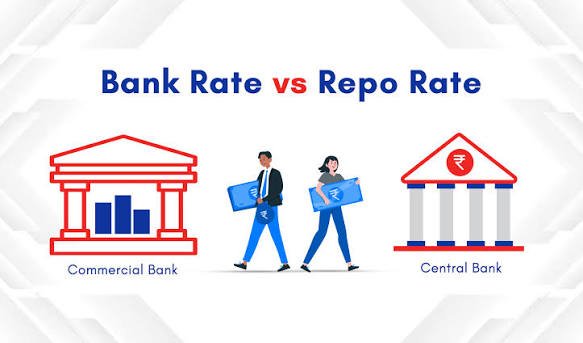
| Aspect | Repo Rate | Bank Rate |
| Current rate | 5.25% | 5.50% |
| Collateral required | Yes, government securities | No, unsecured |
| Typical duration | Short-term, often overnight | Long-term |
| Which is higher | Lower | Higher |
| Purpose | Meeting short-term liquidity needs | Long-term financial requirements of banks |
| Set by | RBI Monetary Policy Committee | RBI, moves in tandem with MSF |
What the Repo Rate Actually Is
The repo rate is the rate at which the RBI lends money to commercial banks against collateral, and it’s the single most closely watched number in Indian monetary policy.
- The central bank charges the repo rate specifically for repurchasing government securities pledged by commercial banks
- Requires collateral in the form of government securities, which is precisely why this rate runs lower than the bank rate
- Designed for short-term borrowing needs, often overnight or extending just a few days
- Serves as the RBI’s primary tool for managing short-term liquidity and signalling its overall monetary policy stance
What the Bank Rate Actually Is
The bank rate operates on a fundamentally different structural principle, even though both rates influence the broader cost of borrowing across the economy.
- The RBI charges the bank rate on loans extended to commercial banks without requiring any securities pledged as collateral
- Because this lending is unsecured, the bank rate runs consistently higher than the repo rate
- Caters specifically to the longer-term financial requirements of commercial banks, rather than short-term liquidity gaps
- Currently moves in close alignment with the Marginal Standing Facility rate, both sitting at 5.50 percent as of the latest policy review
Why the Repo Rate Is Always Lower
Understanding this gap isn’t just academic trivia — it explains why RBI relies on the repo rate as its primary policy lever rather than the bank rate.
- The presence of government securities as collateral reduces the RBI’s lending risk, allowing it to charge a lower rate
- Bank rate lending, being entirely unsecured, carries greater risk for the RBI, which is reflected directly in the higher rate charged
- This risk-based pricing difference is precisely why the two rates rarely move in perfect lockstep, even though both trend in the same general direction over time
- The repo rate’s lower cost and shorter duration make it the more practical, frequently used tool for day-to-day liquidity management
How the Repo Rate Affects Your Loans and EMIs
Because the repo rate directly influences banks’ cost of short-term funds, its movements ripple through to consumer lending rates fairly quickly.
- When RBI cuts the repo rate, banks typically pass on reduced borrowing costs, lowering EMIs on repo-linked home, car, and personal loans
- RBI cut rates by a cumulative 125 basis points across 2025, the most aggressive easing cycle since 2019, bringing the repo rate down from 6.50 percent to 5.25 percent
- Since December 2025, the rate has remained on a deliberate pause, with the RBI holding steady through its most recent policy reviews in a neutral stance
- A 25 basis point cut on a ₹50 lakh home loan can reduce monthly EMIs by roughly ₹1,600, illustrating how directly these decisions touch household budgets
How the Bank Rate Fits Into the Broader Policy Framework
While less frequently discussed in daily financial news, the bank rate still plays a meaningful role in India’s monetary policy architecture.
- Historically used as the primary tool for signalling monetary policy stance before the repo rate took on that role more prominently
- Now functions largely as a benchmark that moves in tandem with the Marginal Standing Facility rate, both currently at 5.50 percent
- Continues to influence certain longer-term lending relationships between the RBI and commercial banks
- Provides a useful reference point for understanding the full spectrum of RBI’s lending rates, from the cheapest short-term option to the more expensive unsecured alternative
The Complete Rate Structure at a Glance
Beyond just the repo and bank rate, understanding where they sit within RBI’s full toolkit clarifies how monetary policy actually functions.
- Standing Deposit Facility rate currently sits at 5.00 percent, the rate at which banks park surplus funds with the RBI
- Repo rate sits at 5.25 percent, the rate at which banks borrow short-term funds against collateral
- Bank rate and Marginal Standing Facility rate both sit at 5.50 percent, representing the more expensive, longer-term or emergency borrowing options
- This tiered structure gives the RBI multiple levers to manage liquidity precisely, rather than relying on a single blunt interest rate tool
Frequently Asked Questions
Q1. Which rate directly affects my home loan EMI in India?
The repo rate has the most direct and immediate impact, since most floating-rate home loans in India are now linked to it, meaning RBI rate cuts or hikes flow through relatively quickly to your EMI.
Q2. Why doesn’t the bank rate change as frequently as the repo rate in policy announcements?
The bank rate has become less central to RBI’s active policy signalling since the repo rate took over as the primary tool, though it still moves periodically, generally tracking the Marginal Standing Facility rate.
Q3. Is a lower repo rate always good news for borrowers?
Generally yes for EMIs, since lower repo rates typically mean cheaper loans, though it can also mean lower returns on fixed deposits and savings instruments for depositors.
Q4. How can I check the current repo rate and bank rate before taking a loan?
The RBI publishes updated rates after every Monetary Policy Committee meeting, held roughly every two months, and these are widely reported by financial news sources and most major bank websites immediately after each announcement.