The moment HDFC Bank’s market capitalisation crossed ten times that of Switzerland’s crisis-struck Credit Suisse, it signalled something bigger than one company’s success — a fundamental shift in where global banking power actually sits. India’s private banking sector, born out of the early-1990s liberalisation that ended decades of nationalised-only banking, has since grown into a genuinely dominant force, with private banks now regularly outvaluing entire foreign banking giants combined. This list covers the top 10 biggest private banks in India in 2026, ranked by market capitalisation.
| Rank | Bank | Founded | Market Cap (₹ Lakh Crore) |
| 1 | HDFC Bank | 1994 | 11.2-14.8 |
| 2 | ICICI Bank | 1994 | 9.9-10.2 |
| 3 | Kotak Mahindra Bank | 2003 | 3.9-4.3 |
| 4 | Axis Bank | 1994 (as UTI Bank) | 3.8-4.2 |
| 5 | Federal Bank | 1931 | 0.87 |
| 6 | IDBI Bank | — | 0.73-0.89 |
| 7 | IDFC FIRST Bank | — | 0.73-0.74 |
| 8 | IndusInd Bank | 1994 | 0.70-1.0 |
| 9 | YES Bank | 2004 | 0.71-0.72 |
| 10 | Bandhan Bank | — | 0.28 |
1. HDFC Bank
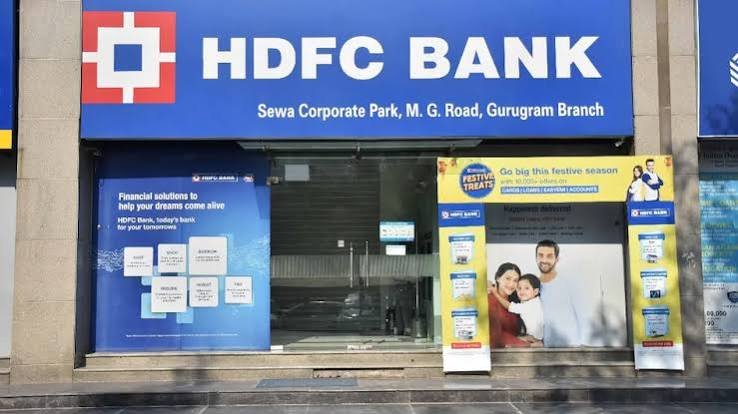
HDFC Bank stands as India’s largest private sector bank by a considerable margin, its dominance further cemented following the landmark HDFC Ltd merger completed on July 1, 2023.
- Market capitalisation ranging roughly ₹11.2-14.8 lakh crore, comfortably the largest of any Indian private bank
- Operates over 9,000 branches and more than 21,000 ATMs across the country
- Known for a seamless digital app, vast retail product range, and consistently low non-performing assets
- Founded in 1994 in Mumbai as a subsidiary of Housing Development Finance Corporation Limited
2. ICICI Bank
ICICI Bank holds the second position, having built its brand around digital innovation and strong retail and SME banking capabilities.
- Market capitalisation ranging roughly ₹9.9-10.2 lakh crore
- Known for its highly rated iMobile app alongside strong wealth management and international banking services
- Originally the banking arm of Industrial Credit and Investment Corporation of India, founded in 1994
- Maintains extensive pan-India presence with particular strength among digitally savvy customers and expats
3. Kotak Mahindra Bank
Kotak Mahindra Bank has built a genuinely premium positioning, particularly strong in wealth management and high-net-worth individual banking.
- Market capitalisation ranging roughly ₹3.9-4.3 lakh crore
- The first bank licensed under RBI’s new private banking norms in 2003, founded by Uday Kotak
- Acquired ING Vysya Bank in 2015, significantly expanding its branch network and customer base
- Particularly strong in urban markets, investments, and mutual fund distribution
4. Axis Bank
Axis Bank, originally established in 1994 as UTI Bank before its 2007 rebrand, holds the third position among India’s largest private banks.
- Market capitalisation ranging roughly ₹3.8-4.2 lakh crore
- Diversified across retail and corporate banking, with particularly strong credit card and loan products
- Originated from UTI, the Unit Trust of India, before its transition to full private bank status
- Maintains wide national coverage with growing digital banking presence
5. Federal Bank
Federal Bank carries genuine legacy status among India’s private banks, founded in 1931, well before the post-liberalisation wave of “new private” banks.
- Market capitalisation around ₹87,249 crore
- One of India’s Old Private Sector Banks, established before economic liberalisation
- Strong presence in Kerala and South India, with growing national digital banking reach
- Serves as the banking partner for popular neobanks including Fi Money and Jupiter
6. IDBI Bank
IDBI Bank occupies a distinctive position, having transitioned from a development financial institution into a full-fledged private bank following LIC’s majority stake acquisition.
- Market capitalisation ranging roughly ₹73,797-88,599 crore
- Undergoing continued privatisation efforts as the government looks to further reduce its stake
- Serves both retail and institutional banking customers across India
- Represents a unique hybrid history bridging public sector origins and private banking classification
7. IDFC FIRST Bank
IDFC FIRST Bank has built its identity around customer-friendly retail banking, formed through the merger of IDFC Bank and Capital First.
- Market capitalisation ranging roughly ₹73,797-74,000 crore
- Known for competitive savings account interest rates and customer-centric digital banking
- Focuses heavily on retail lending and small business banking segments
- Represents one of the newer entrants among India’s larger private banking institutions
8. IndusInd Bank
IndusInd Bank, founded in 1994 with inspiration from the Hinduja Group, has built particular strength in vehicle finance and SME lending.
- Market capitalisation ranging roughly ₹70,407-1,00,000 crore depending on market conditions
- Named after the Indus Valley civilisation, reflecting its distinctly Indian brand identity
- Specialises in vehicle finance alongside premium retail and SME banking segments
- Maintains a solid digital banking app supporting its niche-focused growth strategy
9. YES Bank
YES Bank represents one of Indian banking’s most dramatic turnaround stories, having faced a severe crisis in 2020 before stabilising under new leadership.
- Market capitalisation ranging roughly ₹71,250-72,000 crore
- Founded in 2004 by Rana Kapoor and Ashok Kapur
- Underwent an SBI-led rescue in 2020 following significant non-performing asset accumulation
- Continues stabilising and rebuilding under current management following its restructuring
10. Bandhan Bank
Bandhan Bank rounds out this list, having grown from a microfinance institution into a full-fledged private bank with a strong rural and semi-urban focus.
- Market capitalisation around ₹28,146 crore
- Built its original foundation on microfinance lending before transitioning to full banking status
- Maintains particularly strong presence in Eastern India, especially West Bengal
- Represents the microfinance-to-bank transition pathway within India’s private banking sector
Frequently Asked Questions
Q1. Which is India’s largest private sector bank?
HDFC Bank holds that position decisively, with a market capitalisation ranging roughly ₹11.2-14.8 lakh crore, further strengthened by its 2023 merger with parent company HDFC Ltd.
Q2. What’s the difference between “old” and “new” private sector banks in India?
Old private sector banks like Federal Bank and South Indian Bank were established before India’s 1990s liberalisation, while new private banks like HDFC, ICICI, and Axis were licensed after liberalisation opened the sector to fresh private competition.
Q3. Is it safe to bank with YES Bank after its 2020 crisis?
Yes, following the SBI-led rescue and restructuring in 2020, YES Bank has stabilised under new leadership and continues operating as a regulated private bank with standard deposit insurance protections.
Q4. Which private bank is best for wealth management and high-net-worth banking?
Kotak Mahindra Bank has built the strongest reputation specifically for wealth management, investment products, and premium banking services tailored to high-net-worth individuals.