An exporter shipping textiles to a buyer in Dubai for the first time, and a contractor bidding on a government infrastructure tender in Odisha, are both leaning on bank-backed trust — but the specific instrument each of them needs is completely different, and getting it wrong can genuinely derail a deal. Bank Guarantees and Letters of Credit both show up constantly in Indian trade finance and contract discussions, often used interchangeably by people who don’t actually understand the distinction. That confusion is common enough that experienced trade finance professionals still see operators asking for the wrong instrument entirely. Here’s a clear breakdown of how they actually differ.
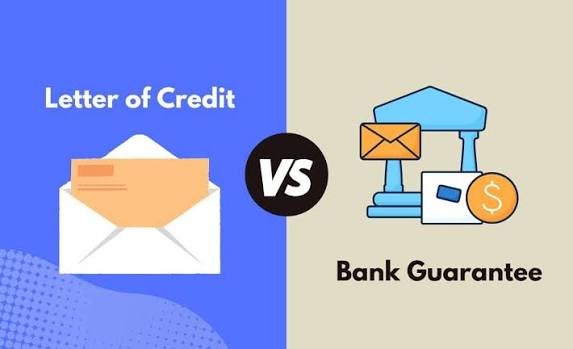
| Aspect | Letter of Credit (LC) | Bank Guarantee (BG) |
| Primary purpose | Payment mechanism for trade | Security against non-performance |
| Who is protected | Seller / exporter | Buyer / project owner |
| When payment triggers | On presentation of compliant documents | Only on default or non-performance |
| Governing framework | UCP 600 | URDG 758 |
| Typical use case | Import-export trade | Construction, tenders, contracts |
| Parties involved | Typically four | Typically three |
What a Letter of Credit Actually Does
A Letter of Credit functions as the primary payment mechanism in a transaction, not a fallback — the bank’s role here is active, not conditional.
- A written commitment from the buyer’s bank to pay the seller a specified amount once predefined terms and documents are met
- Payment is made directly on fulfilling contract terms and presenting compliant shipping and trade documents, not as a backup plan
- Widely used in international trade, particularly imports and exports, though it can also apply domestically
- The bank actively verifies documents as part of the process, meaning it plays a genuinely operational role rather than sitting passively in the background
What a Bank Guarantee Actually Does
A Bank Guarantee works in a fundamentally different way — it’s a backstop that only activates if something goes wrong, not a routine payment channel.
- A financial promise by a bank to compensate the beneficiary if the applicant fails to meet contractual obligations
- Payment happens only upon default of the applicant, never as a matter of routine transaction completion
- Commonly used in construction contracts, government tenders, supply agreements, and large infrastructure projects
- The bank intervenes only if obligations aren’t met and a valid claim is formally made by the beneficiary
The Core Difference: Payment Plumbing vs Backstop Protection
Understanding this distinction is the single most important thing to get right before choosing either instrument for a transaction.
- An LC is the deal’s actual payment plumbing — it’s the primary route through which payment flows once conditions are satisfied
- A BG sits entirely outside the payment plan, functioning purely as a fallback in case the primary obligation isn’t honoured
- A seller wanting guaranteed payment upon shipment genuinely needs an LC, not a BG, since a BG only triggers after the seller has already shipped, gone unpaid, and formally declared default
- Confusing the two — asking for a BG when an LC is actually needed — is one of the most common and costly mistakes operators make in trade finance
Who Is Protected in Each Instrument
The party each instrument is designed to protect differs significantly, which explains why the wrong choice can leave you exposed.
- A Letter of Credit primarily protects the seller or exporter, ensuring they receive payment once they’ve fulfilled their end of the transaction
- A Bank Guarantee primarily protects the beneficiary, typically the buyer or project owner, against the applicant’s non-performance or default
- This means the “right” instrument genuinely depends on which side of the transaction you’re on and what risk you’re actually trying to mitigate
- Mixing this up isn’t a minor technicality — it determines whether you actually get the financial protection you were expecting
Governing Regulations and Frameworks
Both instruments operate under distinct international frameworks, and understanding which applies helps clarify expectations around documentation and dispute resolution.
- Letters of Credit are typically governed by UCP 600, the Uniform Customs and Practice for Documentary Credits set by the International Chamber of Commerce
- Bank Guarantees are typically governed by URDG 758, the Uniform Rules for Demand Guarantees
- In India, both instruments are additionally regulated by Authorised Dealer banks under FEMA and RBI directions, particularly for cross-border transactions
- Knowing which framework governs your specific instrument matters when disputes arise or when documentation requirements need clarification
Practical Use Cases in the Indian Context
Seeing how these instruments actually function in real Indian business scenarios makes the distinction genuinely concrete rather than purely theoretical.
- For foreign exporters selling to Indian buyers, an LC issued by an Indian bank eliminates non-payment risk, since the bank effectively steps into the buyer’s shoes
- For foreign companies winning contracts in India, a BG from an Indian bank demonstrates financial credibility without locking up working capital abroad
- Indian construction and infrastructure tenders routinely require BGs from bidders as proof of serious financial commitment
- Import-export businesses dealing with new or unfamiliar international counterparties frequently rely on LCs specifically to reduce cross-border payment uncertainty
Number of Parties Involved
The structural complexity of each instrument also differs, reflecting their different operational purposes.
- Bank Guarantees typically involve three parties: the applicant, the beneficiary, and the issuing bank
- Letters of Credit typically involve four parties, adding the advising or negotiating bank alongside the buyer’s issuing bank, seller, and buyer
- This additional layer in LCs reflects the more active document-verification role banks play in facilitating actual payment
- BGs’ simpler three-party structure reflects their more passive, contingent nature as a fallback instrument
Frequently Asked Questions
Q1. Can a business use both a Letter of Credit and a Bank Guarantee in the same transaction?
Yes, particularly in large infrastructure or supply contracts, where an LC secures the payment mechanism while a separate BG guarantees performance or contract completion.
Q2. Which instrument is riskier for the bank issuing it?
A Letter of Credit generally carries higher risk for the bank since it actively commits to paying upon document compliance, while a Bank Guarantee only exposes the bank if the applicant actually defaults.
Q3. Do I need an LC for domestic Indian trade, or only for international transactions?
LCs are used predominantly in international trade but can also apply domestically, though Bank Guarantees are more commonly seen in India’s domestic construction and government tender contexts.
Q4. What happens if a seller ships goods under an LC but the documents don’t match the agreed terms?
The issuing bank can refuse payment if the presented documents don’t strictly comply with the LC’s terms, which is why precise, accurate documentation is critical when working with Letters of Credit.