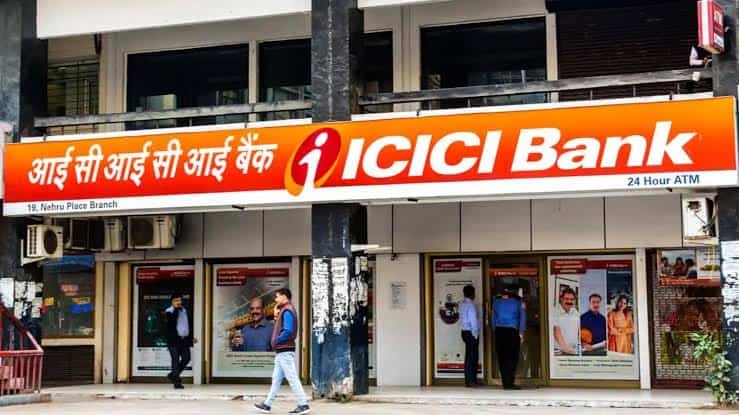
Roughly 80 percent of ICICI Bank’s revenue in FY24 came from within India’s borders — a statistic that captures both the bank’s greatest strength and one of its clearest vulnerabilities in the same number. ICICI Bank has spent recent years posting stronger margins and faster loan growth than rival HDFC Bank, backed by a CASA ratio near 52 percent and capital adequacy comfortably above regulatory minimums. Yet the same digital-first strategy that’s made it India’s fastest-growing large private bank also exposes it to cybersecurity risk and fintech disruption in ways older, branch-heavy competitors face differently. Here’s a genuine, structured breakdown of where ICICI Bank actually stands.
Strengths
ICICI Bank’s competitive position rests on a combination of financial discipline, digital leadership, and diversified revenue streams built over years of deliberate strategy.
- Robust capitalisation and liquidity, with CET1 capital around 15.9 percent as of FY2024/25, comfortably above regulatory requirements
- Healthy CASA ratio near 52 percent, supporting consistently low funding costs relative to peers
- Conservative provisioning, with a provisioning coverage ratio around 70 percent, strengthening overall balance sheet resilience
- Strong core operating profit growth, up 24 percent in FY24, reflecting genuinely improving operational efficiency
- Digital leadership across banking channels, giving the bank broad customer convenience and additional fee-based revenue streams
- Diversified financial services portfolio spanning retail and corporate banking, insurance, asset management, and investment banking through its various subsidiaries
Weaknesses
Despite its strong financial metrics, ICICI Bank carries structural vulnerabilities that show up consistently across independent strategic analyses.
- Heavy overdependence on Indian operations, with approximately 80 percent of FY24 revenue originating domestically, exposing the bank disproportionately to local economic downturns
- Urban-centric focus, with rural and semi-urban market penetration remaining weaker compared to public sector banks like SBI or Bank of Baroda
- Complex conglomerate structure, with multiple subsidiaries raising oversight and governance demands
- Significant exposure to corporate loans, historically making the bank vulnerable during economic slowdowns affecting sectors like infrastructure and manufacturing
- Higher service charges relative to some competitors, a longstanding customer complaint reflected in independent reviews
- Operational risks stemming from rapid digitisation, including elevated cybersecurity exposure that comes with extensive digital-first operations
Opportunities
ICICI Bank has several genuinely significant growth avenues available, many tied directly to India’s expanding financial inclusion and digital economy.
- Expanding rural and semi-urban banking reach, tapping into the next wave of financial inclusion and deposit growth from underserved regions
- Growing cards and payments channel in India, offering meaningful revenue growth as digital transaction volumes continue expanding
- Strategic fintech partnerships, allowing the bank to access innovation and attract younger, tech-savvy customers without building every capability internally
- Cross-selling opportunities across its diversified subsidiary ecosystem, spanning insurance, asset management, and securities businesses
- Strategic acquisitions of smaller banks or financial services companies, extending market reach and product breadth
- Continued growth in wealth management and retail lending, aligning with India’s expanding middle class and rising disposable income
Threats
External pressures facing ICICI Bank reflect both industry-wide challenges and some risks particularly relevant given its digital-first strategic positioning.
- Intense competition from both established private banks like HDFC, Axis, and Kotak, and public sector banks now aggressively modernising their own digital infrastructure
- Fintech startups and payment banks capturing market share in niche areas like UPI, micro-lending, and digital wallets
- Elevated cybersecurity risk, given the bank’s extensive digital operations and the rising sophistication of financial sector cyberattacks globally
- Regulatory scrutiny and evolving compliance requirements, both domestically and internationally, adding to operational costs
- Potential asset quality deterioration, particularly in unsecured retail lending segments, despite recent improvements in overall NPA metrics
- Macroeconomic volatility and interest rate fluctuations that could affect both loan demand and credit quality across the bank’s diversified portfolio
Digital Leadership: A Double-Edged Strategic Position
No SWOT analysis of ICICI Bank would be complete without recognising how central digital transformation is to both its competitive advantage and its risk profile simultaneously.
- The bank’s digital-first approach has genuinely differentiated it in customer convenience, transaction speed, and cross-selling capability
- That same digital dependence means any significant breach or system failure carries outsized reputational and financial consequences
- Global financial sector cybercrime losses are estimated in the trillions annually, underscoring the genuine scale of risk digital-first banks like ICICI must actively manage
- How well ICICI Bank continues balancing aggressive digital innovation against robust cybersecurity investment will likely shape its competitive trajectory as much as any traditional banking metric
Frequently Asked Questions
Q1. What is ICICI Bank’s biggest financial strength compared to competitors?
Its combination of a healthy CASA ratio near 52 percent and strong capital adequacy gives it low-cost funding access and a solid buffer for absorbing economic shocks.
Q2. Why is ICICI Bank’s heavy reliance on domestic revenue considered a weakness?
With roughly 80 percent of FY24 revenue coming from India alone, the bank remains disproportionately exposed to local economic downturns and regulatory shifts compared to more geographically diversified global banks.
Q3. Is ICICI Bank more vulnerable to cybersecurity threats than other Indian banks?
Not necessarily more vulnerable, but its extensive digital-first operations do create meaningful cybersecurity exposure that requires continuous, proactive risk management investment.
Q4. Does ICICI Bank’s urban focus put it at a disadvantage against public sector banks?
In rural and semi-urban markets, yes — banks like SBI and Bank of Baroda maintain considerably stronger penetration there, representing a genuine growth opportunity ICICI Bank hasn’t yet fully captured.